 Skip to content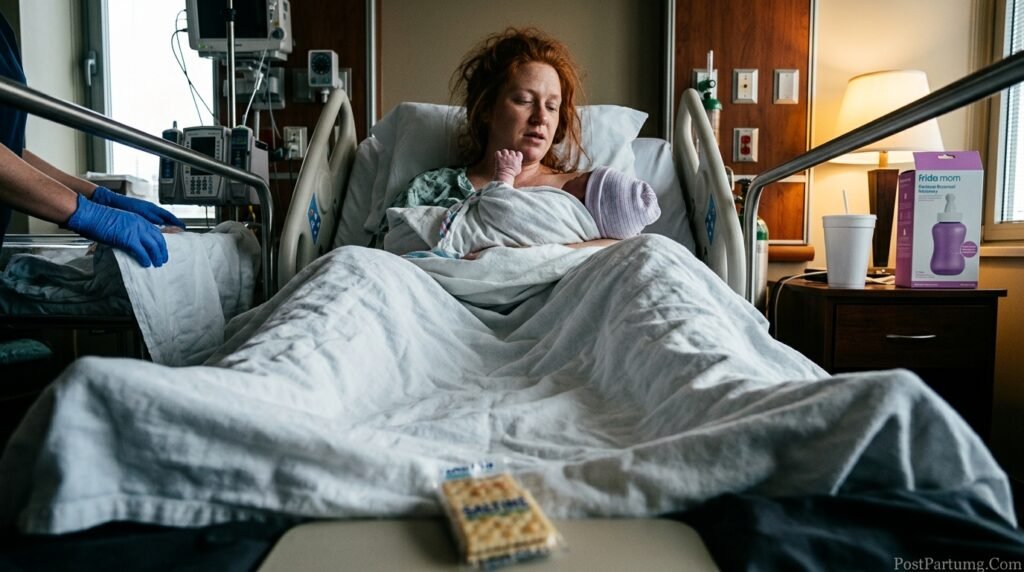
You pushed a human being into the world. Your body did something extraordinary — and now it needs time to recover from it. If you’re in the early days or weeks after a vaginal birth wondering what’s normal and what isn’t, this guide is exactly what you need.
Vaginal birth recovery week by week follows a fairly predictable pattern, but most new mothers are surprised by how long some aspects take, how many changes happen simultaneously, and how different the experience feels from what they expected. This article covers what’s actually happening in your body from the first hours after birth through the 12-week mark, with clear guidance on what’s normal, what needs medical attention, and what you can do to support your own healing.
First Hours After Birth: What Happens in the Delivery Room
Recovery begins before you leave the delivery room. In the first one to two hours after birth, your care team monitors you closely for signs of postpartum hemorrhage and checks that your uterus is contracting as expected.
What you’ll notice:
- Your nurse or midwife pressing on your abdomen periodically — this is checking uterine firmness. A firm uterus means it’s contracting properly. A soft or “boggy” uterus signals inadequate contraction.
- Significant postpartum bleeding — this is normal. Lochia (postpartum discharge) begins immediately after delivery. Heavy bleeding in the first hours is expected.
- Shaking or shivering — extremely common in the first hour after birth. This is a physiological response to the effort of labor, hormonal changes, and temperature shifts. It typically resolves within an hour and does not indicate illness.
- Hunger and thirst — labor is extraordinarily physically demanding. Your body wants food and fluid immediately.
If you had an epidural, sensation returns gradually over one to three hours. Your legs may feel numb or heavy for this period — this is temporary and expected.
If stitches were placed for a perineal tear or episiotomy, your care team completed these before you left the delivery area. The full perineal healing process is detailed in our guide on perineal tear recovery.
Week-by-Week Recovery Timeline
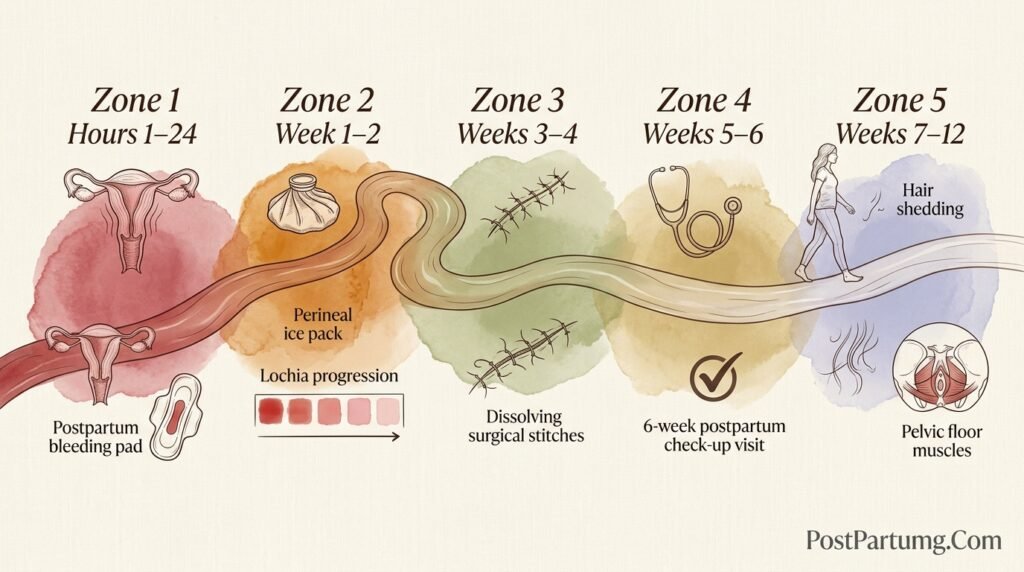
Week 1: The Hardest Physical Days
The first week is typically the most physically demanding of vaginal birth recovery. Multiple processes are happening simultaneously — and most of them are uncomfortable.
Postpartum bleeding (lochia rubra): Bright to dark red, heavy flow. In the first 24 hours, going through a pad every one to two hours is normal. Small clots are common. A clot larger than a golf ball warrants a call to your provider.
Uterine cramping (afterpains): Your uterus actively contracts during the first week to shrink back to its pre-pregnancy size. These cramps are often strongest during breastfeeding, when oxytocin release intensifies contractions. For second and subsequent babies, afterpains are typically significantly stronger — your uterus has an established oxytocin response pathway. Most women find afterpains manageable with ibuprofen.
Perineal pain and swelling: Bruising, swelling, and soreness in the perineal area are normal whether or not you had a tear. Ice packs applied to the area (wrapped in cloth) every one to two hours provide meaningful relief in the first 48 hours. A peri bottle — a small squeeze bottle you fill with warm water — dramatically reduces the burning sensation during urination. Ask your hospital for one before you go home.
Difficulty with bowel movements: The first bowel movement after birth is a source of genuine anxiety for most new mothers. It’s usually harder than expected. Ask your provider about a stool softener before you need it. Stay well hydrated, eat fiber, and don’t strain. Supporting your perineum with a clean pad when you do go significantly reduces discomfort.
Sleep disruption: Newborns feed 8–12 times per day in the first week. Sleep is fragmented and insufficient. This is a physiological reality of new parenthood — not a problem to solve in week one.
What helps most this week: Rest as much as possible. Accept every offer of help. Use the peri bottle consistently. Take ibuprofen and/or acetaminophen on schedule rather than waiting for pain to become severe.
Week 2: Starting to Surface
By week two, most women notice a shift. The acute intensity of week one has passed. The perineal area still aches but the severe pain has reduced. Bleeding transitions from heavy red (lochia rubra) to pinkish-brown (lochia serosa) — a sign that healing is progressing.
What’s normal this week:
- Lochia turning pink, brownish, or pale orange-pink
- Perineal stitches beginning to itch — this is a reliable sign of healing
- Breast fullness and engorgement as milk supply establishes
- Baby blues symptoms if present, typically peaking around days 3–5 and beginning to ease
- Continued fatigue — significant and sustained
Breastfeeding challenges: Week two is often when breastfeeding problems become most apparent. Latch difficulties, engorgement, and nipple soreness commonly peak in this window. Contact a lactation consultant if feeding is painful or your baby isn’t gaining weight appropriately. Our breastfeeding latch guide covers correct positioning and how to fix common problems.
What to avoid this week: Baths (showers are fine), swimming, inserting anything vaginally, and heavy lifting. Your cervix is still partially open during this period.
Watch for: Lochia with a foul odor, fever above 100.4°F (38°C), increasing rather than decreasing pain, or wound separation — all warrant prompt contact with your care team.
Weeks 3–4: Gradual Improvement
Most women notice genuinely meaningful improvement in weeks three and four compared to the first two. Movement becomes easier. Perineal tenderness continues but is less intense. Bleeding lightens toward lochia alba — pale yellow or whitish discharge.
According to ACOG’s optimizing postpartum care guidelines, all women should have contact with their obstetric care provider within the first three weeks postpartum. If your practice schedules only a six-week appointment, proactively request an earlier check-in — especially if you’re experiencing mood concerns, wound issues, or feeding difficulties.
Physical milestones this window:
- Perineal stitches mostly dissolved (dissolvable stitches typically break down within 2–4 weeks)
- Uterus shrinking below the pubic bone and becoming non-palpable
- Hormones beginning to stabilize (more so if not breastfeeding)
- Energy slowly returning — most women still feel significantly tired but begin to have better windows
Sleep and recovery: Even if sleep is still fragmented, most women feel less physically raw by week four. Emotional adjustment is often the primary challenge at this stage rather than acute physical pain.
Pelvic floor awareness: By week four, gentle pelvic floor awareness exercises are appropriate for most women — not intense Kegels, but simply identifying and gently engaging the pelvic floor muscles. Our pelvic floor recovery guide covers when to start and how to progress safely.
Weeks 5–6: The Six-Week Checkpoint
The six-week postpartum visit is an important milestone — and one that’s often misunderstood as a “clearance” or “finish line.” It’s neither. It’s a clinical checkpoint.
At your visit, your provider will examine your uterus, cervix, perineum, and overall physical recovery. They’ll screen for mood concerns, ask about feeding, discuss contraception, and address any questions you’ve held onto since the birth. Our detailed guide on the 6-week postpartum checkup covers everything to bring and ask at this appointment.
What “cleared at six weeks” means: Most providers give general clearance for sexual activity and more structured exercise at the six-week visit. But this is a population-level guideline — your actual readiness depends on how your individual healing has progressed.
- Perineal healing may still be incomplete at six weeks, particularly after significant tearing
- Vaginal dryness after baby is extremely common and can make sexual activity uncomfortable even after the six-week mark — this is hormonal and normal
- Your pelvic floor may not be ready for high-impact exercise even if your stitches have healed
Exercise clearance: ACOG recommends 150 minutes per week of moderate aerobic activity postpartum — but this is a goal, not a starting point. Start with walking. Get a pelvic floor assessment before returning to running, jumping, or heavy lifting.
Weeks 7–12: Building Back
The period from weeks seven to twelve is when most women begin genuinely rebuilding rather than simply recovering. The acute healing phase is complete. Hormones are moving toward stabilization. Energy windows become longer.
What changes this window:
- If not breastfeeding: periods may return, typically around 6–8 weeks, though timing varies widely
- If breastfeeding: periods often stay absent for months; hormonal shifts continue through the nursing period
- Postpartum hair loss typically begins around 3 months — the delayed shedding of hair that was retained during pregnancy
- Core and pelvic floor strength rebuilding if you’ve started appropriate rehabilitation
- Many women first notice diastasis recti (abdominal separation) in this window as the initial swelling resolves
Return to exercise: Walking, gentle yoga, swimming (once lochia has resolved), and cycling at low intensity are appropriate during this window for most women. Hold off on running, HIIT, heavy weightlifting, and high-impact classes until you’ve had a pelvic floor assessment — see our pelvic floor recovery guide.
Emotional health at this stage: Research cited in the journal Pediatrics documents a secondary peak in postpartum depression symptoms around three to six months postpartum — distinct from the initial baby blues window. Many mothers are surprised when mood difficulties emerge or intensify during a period they expected to feel better. If this happens, please speak with your provider. Postpartum anxiety and depression are treatable medical conditions — and they deserve attention at any point in the first year.
Complete Recovery Timeline at a Glance
| Week | Healing Milestones | Primary Focus | Common Challenges |
|---|---|---|---|
| 1 | Heavy lochia, peak perineal pain, afterpains, milk coming in | Rest, ice, peri bottle, pain relief | Pain, sleep deprivation, baby blues |
| 2 | Lochia lightening, stitches itching, feeding establishing | Continue pain management, accept help | Breastfeeding challenges, mood shifts |
| 3–4 | Stitches mostly dissolved, energy slowly returning | Pelvic floor awareness begins | Fatigue, mood adjustment |
| 5–6 | Six-week checkpoint, basic physical recovery complete | Exercise discussion, contraception | Feeling cleared but not fully healed |
| 7–12 | Hormones stabilizing, gradual strength rebuilding | Pelvic floor rehab, structured exercise | Hair loss, diastasis recti discovery |
Individual recovery varies based on degree of perineal trauma, birth experience, support system, and baseline health.
What Actually Helps Vaginal Birth Recovery
Ice — first 48 hours: The most effective pain relief in the first 48 hours. Wrapped ice pack or specialized perineal cold pack applied for 10–20 minutes every one to two hours. After 48 hours, switch to warm sitz baths.
Peri bottle — consistently: Fill with warm water, use every single time you use the bathroom for at least the first two weeks. Dilutes urine to reduce stinging, keeps the area clean without wiping. One of the most practically helpful tools of early recovery.
Sitz baths: Shallow warm water soaks for 10–15 minutes, two to three times daily from around day three. Available as a basin that fits over your toilet. Relieves discomfort and supports healing. Plain warm water is sufficient — add Epsom salts or witch hazel only if your provider recommends it.
Stool softeners: Start these before you need them. Your first bowel movement after birth is significantly easier with a softener. Ask your provider before discharge.
Ibuprofen on schedule: Anti-inflammatory and analgesic simultaneously. More effective for perineal pain than acetaminophen alone. Stay ahead of pain in the first week rather than treating it reactively.
Real food and hydration: Your body is running several simultaneous repair processes. Protein rebuilds tissue. Iron replenishes blood lost during delivery. Hydration keeps everything functioning. Our postpartum meal prep guide covers what nutrients matter most and how to have them ready.

Warning Signs That Need Prompt Medical Attention
Most vaginal birth recovery is uncomfortable but straightforward. These symptoms are not normal and warrant contact with your care team.
Call your doctor or midwife promptly if:
- Fever above 100.4°F (38°C) at any point in the first six weeks
- Foul-smelling vaginal discharge
- Lochia that returns to heavy red bleeding after it had lightened
- Perineal wound that appears to be opening, separating, or developing pus
- Increasing rather than decreasing pain after day three
- Pain or burning on urination with frequency and urgency
- Inability to have a bowel movement despite stool softeners and five or more days postpartum
Seek immediate emergency care if:
- Soaking more than one pad per hour for two consecutive hours
- Passing clots larger than a golf ball
- Sudden severe headache, vision changes, or upper abdominal pain — possible postpartum preeclampsia
- Rapid heart rate, difficulty breathing, or feeling faint alongside heavy bleeding
- Any thoughts of harming yourself or your baby — call 988 immediately
Our comprehensive guide on postpartum infection symptoms covers each infection type in detail so you know exactly what to watch for.

Returning to Sex After Vaginal Birth
Standard guidance is to wait six weeks before resuming penetrative sex after vaginal birth. This timeline is a baseline minimum, not a target deadline.
What you actually need before returning to sexual activity:
- Perineal healing — not just closed stitches but comfortable tissue
- Your own physical and emotional readiness — both matter equally
- Adequate vaginal lubrication — breastfeeding keeps estrogen low, which causes vaginal dryness that can make sex painful
If sex is painful at six weeks, that’s very common and doesn’t mean something is wrong with your healing. Low estrogen during breastfeeding causes vaginal tissue to thin and dry — a water-based lubricant makes a significant practical difference, and low-dose vaginal estrogen (prescribed by your OB) is safe during nursing if symptoms are significant.
Contraception After Vaginal Birth
Ovulation can return before your first period — and before six weeks postpartum. If you’re not breastfeeding, ovulation may resume as early as four weeks after delivery. If you’re breastfeeding exclusively, you have some natural protection, but it is not reliable enough to use as your sole contraceptive method.
Discuss contraception at your six-week visit — ideally earlier if you were planning to resume sexual activity near the six-week mark.
Myth vs. Fact
Myth: Recovery after vaginal birth is quick and easy compared to C-section. Fact: Vaginal birth recovery involves significant perineal healing, major hormonal shifts, and several weeks of physical limitations. It is different from C-section recovery — but not uniformly “easier.”
Myth: If your stitches have dissolved, you’re healed. Fact: Stitch dissolution indicates surface healing. Deeper tissue healing takes longer. Pelvic floor muscle recovery and hormonal stabilization continue for months.
Myth: You should be back to normal at six weeks. Fact: Six weeks marks basic uterine involution and general physical stabilization. Many women still experience fatigue, mood adjustment, pelvic floor symptoms, and hormonal effects well beyond six weeks. This is normal.
Myth: Pain during sex at six weeks means something went wrong. Fact: <cite index=”26-1″>Discomfort typically lessens within four to six weeks</cite> for most women, but vaginal dryness from low estrogen during breastfeeding is one of the most common causes of painful intercourse at the six-week mark and beyond — it’s treatable, not a sign of incorrect healing.
Frequently Asked Questions
For most women, the sharpest perineal pain resolves within the first two weeks. Residual soreness and sensitivity can continue for four to six weeks, particularly with first or second degree tears. Third and fourth degree tears take longer — three to six months for full tissue healing in some cases. If pain persists beyond six weeks, discuss it with your provider and ask for a pelvic floor physical therapy referral.
Sitz baths — shallow soaks for the perineal area — are appropriate from around day three. Full immersion baths should wait until your lochia has resolved and your perineum is fully healed, typically around four to six weeks. Ask your provider to confirm based on your specific healing progress.
Some women do feel emotionally more difficult at week two — the adrenaline of early birth has faded, reality has set in, and sleep debt is compounding. This is when baby blues symptoms often peak. If emotional difficulty persists beyond two weeks, contact your provider — it may indicate a postpartum mood disorder that deserves clinical support.
Gentle walking is appropriate within the first few days for most uncomplicated vaginal deliveries. Structured exercise — including running, gym workouts, and high-impact classes — should wait for provider clearance at the six-week visit, and ideally a pelvic floor assessment before returning to any high-impact activity.
Some level of postpartum discharge is normal for up to six weeks. The pattern should progress from heavy red to pinkish-brown to pale yellow or white. Bleeding that suddenly increases in volume or returns to bright red after it had lightened warrants a call to your provider.
Some women — particularly those with third or fourth degree tears, or those who experienced significant perineal bruising — do still have meaningful discomfort at four weeks. If your pain is worsening rather than gradually improving, or if you have fever or unusual discharge, contact your provider. If it’s simply slow progress, ask for a pelvic floor physiotherapy referral — they can assess healing and provide targeted treatment.
Sources
- American College of Obstetricians and Gynecologists (ACOG) — Optimizing Postpartum Care
- Mayo Clinic — Postpartum Care: What to Expect After a Vaginal Delivery
- American Pregnancy Association — Postpartum Recovery: Physical Healing and Facts
- WebMD — What Is Vaginal Delivery Recovery Like?
- Postpartum Support International (PSI) — Postpartum Resources
- Pediatrics — Secondary Postpartum Depression Peak at 3–6 Months Research
- National Institutes of Health (NIH) — Postpartum Recovery and Pelvic Floor
All information reflects evidence available as of 2026.


