 Skip to content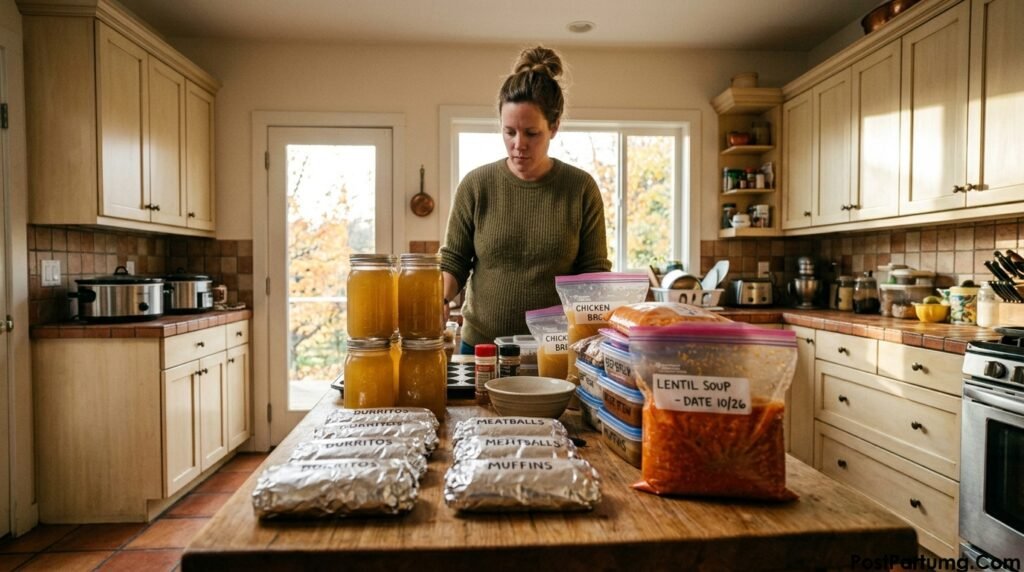
You will not want to cook in the first weeks after your baby arrives. Not because you’re lazy — but because you’ll be holding a newborn in one arm, running on fragmented sleep, and managing more physical and emotional demands than most people fully anticipate before birth.
The mothers who eat well in the postpartum period are usually the ones who prepared before the baby came. Postpartum meal prep ideas aren’t just about convenience — they’re about giving your recovering body the nutrients it actually needs to heal, produce milk, and function as a human being during one of the most demanding seasons of life. This guide covers exactly what your body needs, what foods freeze best, and how to build a practical freezer stash without running yourself into the ground before the birth.
Why Postpartum Nutrition Is a Recovery Tool, Not Just Fuel
Most new mothers undereat in the first weeks postpartum — not from choice, but from circumstance. A 2025 observational study published in Nutrients (the GREEN MOTHER study, Martínez-Galiano et al.) found that 53% of breastfeeding mothers don’t even reach the minimum recommended caloric increase despite understanding that their needs are higher after birth.
The consequences are real:
- 57% of postpartum women consume fewer calories than clinical recommendations in the first six weeks, according to research cited by Northside Hospital’s postpartum nutrition review (2026)
- Iron, vitamin D, magnesium, and calcium are the most consistently inadequate nutrients in postpartum diets, per the same review
- Protein requirements during lactation are likely higher than current guidelines suggest — newer research from the American Journal of Clinical Nutrition using indicator amino acid oxidation methodology suggests breastfeeding women may need 1.7–1.9 g/kg/day rather than the standard 1.05 g/kg/day recommendation
What this means practically: your body is healing major tissue damage, rebuilding blood supply lost during delivery, and — if you’re breastfeeding — manufacturing roughly 750 mL of milk per day. That requires real food, consistently available and easy to access.
A freezer full of nutrient-dense meals solves the access problem before it becomes a problem.
What Nutrients Your Postpartum Body Needs Most
Build your meal prep list around these priorities. Every meal category below is chosen to address specific recovery needs.
| Nutrient | Why It Matters Postpartum | Best Food Sources |
|---|---|---|
| Protein | Tissue repair, milk production, muscle maintenance | Eggs, chicken, lentils, Greek yogurt, fish, beef |
| Iron | Replaces blood lost during delivery; reduces fatigue | Red meat, dark leafy greens, lentils, fortified cereals |
| Omega-3 fatty acids (DHA/EPA) | Supports mood regulation and infant brain development | Oily fish (salmon, sardines), walnuts, flaxseed |
| Calcium | Bone density, muscle function | Dairy, fortified plant milks, sardines, leafy greens |
| Vitamin D | Bone health, immune function, mood | Fortified foods, salmon, egg yolks, sunlight |
| Zinc | Wound healing, immune support | Meat, pumpkin seeds, chickpeas, nuts |
| Fiber | Prevents postpartum constipation | Oats, whole grains, legumes, fruit, vegetables |
| Vitamin C | Collagen synthesis for tissue repair | Citrus, bell peppers, strawberries, kiwi |
The CDC’s updated breastfeeding nutrition guidance (March 2026) recommends an additional 330–400 calories per day for breastfeeding mothers, with emphasis on nutrient-dense rather than empty-calorie increases. Your prenatal vitamin should continue postpartum — but food remains the primary source of what your body needs to actually recover.

The Golden Rules of Postpartum Freezer Cooking
Before listing specific ideas, a few rules that separate useful freezer meals from ones that sit untouched.
Rule 1: One-handed and reheatable. You will frequently be eating with one arm occupied. Meals that require two hands, chopsticks, or complex assembly do not get eaten. Think soups, stews, casseroles, burritos, egg muffins.
Rule 2: Portion for one. Large casserole dishes feel manageable when you have time. At 11 pm postpartum, you need a single portion you can heat in three minutes. Freeze in individual portions or portions for two.
Rule 3: Label everything. Include the meal name, the date frozen, and basic reheating instructions on every bag or container. At 3 am, you will not remember what’s in an unlabeled container.
Rule 4: Include breakfast and snacks, not just dinners. Most freezer meal guides focus on dinner. But postpartum breakfast and snacks are where many mothers fall short. Include overnight oats, egg bites, energy balls, and snack packs.
Rule 5: Prioritize your freezer space. Focus on meals with long-term freeze stability — soups, stews, casseroles, and marinated proteins keep well for up to three months. Dairy-heavy dishes and some pasta dishes don’t freeze as reliably.

30+ Postpartum Freezer Meal Ideas by Category
Soups and Stews — Highest Priority
Soups and stews are the postpartum freezer meal gold standard. They’re rich in nutrients, deeply warming, easy to eat one-handed, freeze exceptionally well, and can be made in large batches efficiently.
Red lentil soup — Iron, protein, and fiber in one pot. Cook red lentils with onion, garlic, cumin, turmeric, and canned tomatoes. Freeze in individual mason jars or bags. Reheats in four minutes.
Bone broth chicken soup — Use a slow cooker to make a large batch of chicken soup with vegetables and bone broth. Bone broth contains collagen and glycine that support tissue repair. Divide into portions and freeze flat.
Lentil and spinach dal — Rich in iron and plant protein. Serve with rice or naan. Freezes beautifully and reheats well.
Black bean soup — High in fiber, iron, and plant protein. Serve with whole grain crackers or tortillas for easy eating.
Slow cooker beef stew — Combines iron-rich beef with vegetables. The collagen in connective tissue cuts supports joint and tissue recovery.
Minestrone — Loaded with vegetables and legumes. Add extra spinach for iron.
Coconut lentil curry — Anti-inflammatory turmeric and ginger combined with plant protein. Serve over frozen rice portions.
Main Dishes
Shakshuka base — Freeze the tomato-pepper sauce without the eggs. Reheat in a skillet, crack in eggs, and have a high-protein meal in minutes.
Slow cooker shredded chicken — Cook chicken breasts with broth and spices, shred, portion into bags. Use in tacos, rice bowls, sandwiches, or soup. Endlessly versatile.
Turkey and vegetable meatballs — Bake a large batch, freeze on a sheet pan, then transfer to bags. Reheat in sauce or broth. High protein, easy to eat.
Beef and bean burritos — Fill tortillas with seasoned ground beef, black beans, cheese, and rice. Wrap individually in foil, freeze in bags. Microwave directly from frozen.
Chicken enchiladas — Assemble in a foil pan, freeze before baking. Reheat in the oven while you nurse. High protein, easy to eat one-handed.
Salmon patties — Rich in omega-3 DHA. Make with canned salmon, egg, oats, and herbs. Freeze individually. Reheat in a skillet in minutes.
Turkey meatloaf — Slice before freezing for easy individual portions. High protein, warming, easy to eat.
Frittata slices — Bake in a rectangular pan, slice, and freeze in individual portions. Eggs provide choline, which supports infant brain development and maternal recovery.
Breakfast and Snacks — Often Overlooked
Overnight oat packs — Combine oats, chia seeds, and protein powder in individual bags. Add milk when ready to eat. Oats contain beta-glucan, which supports heart health and milk production in some women.
Egg muffins — Whisk eggs with vegetables and cheese, pour into muffin tins, bake, cool, and freeze. Microwave for 60 seconds. Perfect one-handed breakfast.
Banana oat pancakes — Make a large batch, freeze between layers of parchment. Toaster-reheat. Simple, comforting, and filling.
Lactation-supporting energy balls — Combine oats, flaxseed meal, nut butter, honey, and dark chocolate chips. Roll into balls, freeze on a sheet, then transfer to a bag. Grab from the freezer and eat in minutes. Flaxseed provides phytoestrogens and lignans that may support milk production.
Zucchini banana muffins — Nutrient-dense, portable, and freezer-friendly. Add protein powder or ground flaxseed for extra nutrition.
Protein smoothie packs — Pre-portion spinach, frozen banana, berries, and ground flaxseed into individual freezer bags. Add protein powder and milk, blend from frozen. One hand, 90 seconds.
Nut butter and oat balls — Similar to energy balls but with different combinations. Try almond butter, oats, pumpkin seeds, and dark chocolate.
Grains and Sides Worth Freezing
Frozen rice portions — Cook a large batch of brown or white rice, cool completely, freeze in one-cup portions in bags. Microwave directly from frozen in two minutes. Pairs with everything.
Roasted vegetable trays — Roast large batches of sweet potato, broccoli, cauliflower, and beets. Freeze in portions. Reheat as needed to add to bowls, soups, or eat alongside protein.
Whole grain breakfast porridge — Make large batches of steel-cut oats or congee (rice porridge). Freeze in individual portions. A warm, gentle breakfast for early postpartum mornings.
Safe Storage: Timelines You Need to Know
Understanding how long food stays safe in the freezer prevents waste and keeps your baby safe if you’re breastfeeding.
| Food Type | Refrigerator | Freezer |
|---|---|---|
| Soups and stews | 3–4 days | 2–3 months |
| Cooked meat/poultry | 3–4 days | 2–3 months |
| Egg dishes (frittata, muffins) | 3–5 days | Up to 3 months |
| Casseroles | 3–4 days | 2–3 months |
| Energy balls and snacks | 1–2 weeks | Up to 3 months |
| Baked goods (muffins, pancakes) | 3–5 days | 2–3 months |
| Rice and grains | 4–6 days | Up to 6 months |
Source: USDA FoodSafety.gov cold storage guidelines
Thawing safely: Always thaw in the refrigerator overnight or under cold running water. Never thaw at room temperature — this creates bacterial growth risk. Most soups and stews can also be reheated directly from frozen on low heat.
Labeling system: Use masking tape and a permanent marker or freezer-safe labels. Include: meal name, date frozen, reheating instructions. Stack with oldest dates at the front.
Building Your Stash: A Practical Pre-Birth Plan
The goal is not to fill your entire freezer in one day. Batch cooking sessions spread across your third trimester are far more manageable — and far less likely to leave you exhausted before the baby even arrives.
Third Trimester Cooking Timeline
Week 32–34: Start with easy wins Focus on soups and stews — they require the least hands-on time and give you the most return for effort. Make double batches of any dinner you cook during this period. One batch for now, one for the freezer.
Week 35–36: Snacks and breakfasts Make a big batch of energy balls and egg muffins. Portion and freeze. These require minimal cooking skill and take under 30 minutes.
Week 37–38: Main dishes Use one Saturday to do a dedicated batch cook. Pick two or three main dishes from the list above. Put a slow cooker meal on in the morning, prep a casserole for the oven, and make a second soup while those cook.
Week 39+: Tops off as needed Add one or two more things if energy allows. Stop pushing yourself. You’ve done the work.
Organizing Your Freezer for Postpartum Life
Organization determines whether you actually use what you’ve prepared.
Dedicate a freezer shelf or drawer. Keep postpartum meals together and separate from general household items. Label that section clearly.
Freeze flat when possible. Soups and stews in zip bags freeze flat, stack vertically, and take up far less space than containers.
Front-load the easiest meals. Put your fastest, simplest reheats at the front — the things you can grab at 11 pm half-asleep. Put larger meals that require more time further back.
Print a meal inventory. A simple paper list on the freezer door showing what’s inside and the date frozen eliminates the “stand and stare” problem when you’re trying to decide what to eat.

Combining Your Freezer Stash With Other Support
Freezer meals work best as part of a broader food support strategy. A postpartum meal train organized before the birth fills gaps when your freezer stock runs low and brings fresh food that freezer meals can’t replicate. Community members who want to help are often genuinely glad to have a specific request — a meal train gives them exactly that.
If you’re struggling to eat regularly in the postpartum period despite having food available, that’s worth mentioning to your provider. Difficulty feeding yourself regularly can sometimes be connected to postpartum depression or anxiety symptoms — particularly the loss of appetite that sometimes accompanies mood disorders. Your health matters as much as your baby’s.
And if cooking before the birth simply isn’t possible — due to pregnancy complications, bed rest, or other circumstances — a postpartum doula who handles light meal preparation and a well-organized meal train can fill the gap.
Cultural Traditions Around Postpartum Food
Many cultures have centuries-old postpartum food traditions that modern nutritional science has confirmed as genuinely sound.
South Asian traditions emphasize warming foods — ginger, turmeric, ghee, and bone broths. These ingredients have anti-inflammatory properties and support tissue healing.
Chinese zuò yuèzi (“sitting the month”) involves warming foods like sesame oil chicken, ginger tea, and fish soups — rich in omega-3s, collagen, and warming spices.
Latin American cuarentena traditionally includes rich soups like caldo de pollo, atole (a warm corn-based drink), and iron-rich foods to support recovery.
Middle Eastern traditions often feature lamb dishes with warming spices, herbal teas, and nutrient-dense grain porridges.
If your cultural background includes specific postpartum food traditions, lean into them. They are not outdated. They reflect generations of practical wisdom that happens to align well with current nutritional science.
Myth vs. Fact
Myth: You should eat less postpartum to lose the pregnancy weight faster. Fact: Caloric restriction during postpartum recovery — particularly while breastfeeding — raises cortisol, slows tissue healing, and can reduce milk supply. The CDC specifically recommends 330–400 additional calories daily for breastfeeding mothers. This is not the time for caloric restriction.
Myth: Freezer meals lose most of their nutritional value. Fact: Freezing preserves most nutrients well. Some heat-sensitive vitamins like vitamin C lose a small amount during cooking, but freezing itself causes minimal nutritional loss for most foods. Frozen meals are nutritionally comparable to freshly cooked equivalents.
Myth: You only need special food if you’re breastfeeding. Fact: Every postpartum body — nursing or not — is recovering from major physical stress, hormonal upheaval, and significant nutritional depletion. Nutrient-dense food supports healing regardless of feeding method.
Myth: Spicy food while breastfeeding will upset your baby. Fact: Most babies are not bothered by their mothers eating spicy food. Flavors do transfer into breast milk in small amounts, but the vast majority of babies tolerate this well and some research suggests early flavor exposure supports dietary variety later. Don’t avoid your favorite foods without a specific reason.
Frequently Asked Questions
A realistic goal is 20–30 individual portions covering two to four weeks of reduced cooking. This doesn’t require a single marathon cooking session — building gradually during your third trimester is more sustainable. Even 10 portions is meaningfully better than none.
Generally yes. There is no standard postpartum “avoid” list in current medical guidance. The focus is on what to include — protein, iron, omega-3s, fiber — rather than on restrictions. If you’re breastfeeding and notice your baby consistently seems gassy or fussy after you eat specific foods, you can try eliminating that food temporarily and reintroducing it to confirm whether there’s a connection.
Oats, flaxseed, and brewer’s yeast are the most commonly recommended galactagogue foods. Evidence for them is limited but they’re safe, nutritious, and worth including. The most evidence-based approach to supply is feeding frequency and thorough milk removal — food alone doesn’t substitute for that. See our low milk supply guide for a full breakdown.
Weeks 35–37 are generally ideal — late enough that you’re building a stash for the real postpartum period, but early enough that you’re not uncomfortable from third-trimester physical symptoms. Avoid cooking marathons in the final two weeks before your due date — save that energy.
Yes — and this is one of the most practical ways for people in your support network to contribute before the birth. Assign specific recipes, provide ingredients, and let them cook. What can’t be cooked by others can often be covered through a postpartum meal train afterward.
Zip-top freezer bags work best for soups, stews, and sauced dishes — they freeze flat, stack efficiently, and thaw quickly. Aluminum foil pans work well for casseroles and baked dishes. Rigid freezer-safe containers with locking lids work for anything you want to reheat directly in the container. Avoid regular storage containers — they crack in the freezer.
Sources
- Centers for Disease Control and Prevention (CDC) — Maternal Diet During Breastfeeding, March 2026
- Northside Hospital Nutrition Team — Postpartum Nutrition for Recovery, May 2026
- Martínez-Galiano JM et al. — “Does Maternal Diet Vary During the Postpartum Period According to Infant Feeding Type?” Nutrients, 2025 (GREEN MOTHER study) — MDPI Full Text
- National Institutes of Health (NIH) / NCBI — Meeting Maternal Nutrient Needs During Lactation
- USDA FoodSafety.gov — Cold Food Storage Charts
- Academy of Nutrition and Dietetics — Eating Right During Breastfeeding
- Karger Publishers — Nutrition for Optimal Lactation, Annals of Nutrition and Metabolism, 2025
All information reflects evidence available as of 2026.


