 Skip to content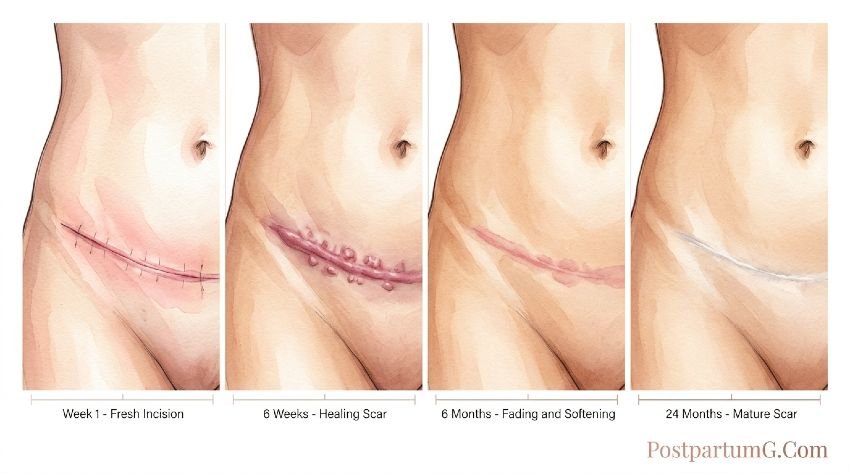
You made it through surgery. You held your baby. And now you’re staring at that horizontal line across your lower abdomen wondering what you’re actually supposed to do with it.
Nobody really prepares you for this part. The hospital sends you home with a quick wound check, maybe a pamphlet, and a “call us if something looks wrong.” Then you’re on your own, Googling at 2 am why your incision itches, why one spot feels completely numb while the spot next to it is weirdly tender, and whether that raised ridge is normal or something to worry about.
C-section scar healing is a real, multi-phase biological process — not something that happens passively while you focus on the baby. There are specific things you can do right now that genuinely improve how your scar heals, how it feels, and how well your body functions months down the road. This guide covers all of it, from the first week through the two-year mark.
What Is Actually Happening Beneath Your Skin
Before jumping into care routines, it helps to understand what your body is already doing — because it’s doing a remarkable amount.
A cesarean section involves cutting through multiple tissue layers. Most surgical teams open seven distinct layers: skin, subcutaneous fat, fascia (a dense connective tissue sheet), the abdominal muscles or the space between them, the peritoneum (the membrane lining the abdominal cavity), and finally the uterus itself. Each of those layers is then closed individually.
Your uterine scar heals on a completely separate timeline from your skin scar. That internal healing is part of why overall postpartum recovery feels so significant — your body is managing multiple simultaneous repair processes.
Your visible skin scar moves through three biological phases.
Phase 1: Inflammation (Days 1–5)
Redness, warmth, and swelling are expected because your immune system is flooding the wound site with repair cells and increased blood flow. Controlled inflammation is the necessary first step in any wound healing. It looks alarming. It’s supposed to happen.
Phase 2: Proliferation (Days 5–21)
Your body begins laying down new collagen — the structural protein that reconnects tissue. During this phase your scar may feel firm, raised, or ropey. That firmness is the collagen network forming. It will soften with time.
Phase 3: Remodeling (3 Weeks to 2 Years)
This is the phase most women never hear about. Starting around three weeks and continuing for up to two years, your body continuously reorganizes and refines that collagen. According to research published in the Wound Healing Society Journal and cited in ACOG postpartum care guidelines, actual scar maturation takes 18–24 months — which is why the care you do now has long-lasting impact.
The scar you see at six weeks is not your final scar. The scar at six months is not your final scar either.

First Two Weeks: Wound Care That Protects Healing
The early phase is about protection and cleanliness. Your wound is closed but still fresh — your job is mostly to stay out of its way while keeping the area clean and dry.
Cleaning Without Causing Damage
Gentle is the operating principle for these early weeks. Most providers give the go-ahead to shower within 24–48 hours of surgery. Let clean, soapy water run over the incision during your shower. Don’t scrub it or aim a strong stream directly at it. Afterwards, pat dry with a clean towel or let it air dry completely before getting dressed.
Skip the hydrogen peroxide and iodine. Despite feeling like they should help, research published in the Journal of Wound Care shows they actually slow healing by damaging the new cells forming at the wound edges. Plain water cleans effectively without the side effects.
Avoid baths, hot tubs, and swimming pools until your provider confirms full wound closure — typically a 4–6 week restriction. Submerging the incision before it’s fully closed creates a real infection risk.
Managing the Skin Fold
Many women have a skin fold or overhang above the incision — the abdominal skin drapes over the scar line because of swelling, remaining pregnancy belly, or individual anatomy. Moisture trapped under that fold is one of the most common causes of irritation and wound complications in C-section recovery.
Keep the fold area dry throughout the day. Some women tuck a thin layer of soft gauze or a clean panty liner under the fold after showering. Others use a light dusting of cornstarch-based powder. The specific method matters less than the result: airflow and dryness in that area.
Clothing and Support Choices
High-waisted postpartum underwear or a soft recovery band makes a meaningful difference in those early weeks. Look for seamless waistbands that sit above the incision line rather than directly on it. Many women find their maternity underwear from pregnancy works well for this purpose.
Warning Signs That Require Prompt Attention
Wound infections after cesarean delivery affect approximately 3–15% of women depending on individual risk factors, according to the NIH. They are very treatable when caught early — knowing what to look for matters.
Contact your healthcare provider if you notice:
- Redness that spreads beyond the incision edges and worsens after the first few days
- Warmth that increases rather than decreases over time
- Discharge that is yellow, green, foul-smelling, or increasing in amount
- Wound edges beginning to separate
- Fever above 100.4°F (38°C)
- Pain that worsens rather than gradually improving
Go to the emergency room immediately if you experience:
- Fever above 103°F (39.4°C)
- Significant wound opening or separation
- Heavy bleeding from the incision site
- Chills, confusion, or rapid heart rate alongside wound symptoms
Be aware that internal complications can develop even when the external wound looks fine. Our complete guide on postpartum infection symptoms covers signs of uterine infection alongside wound infection, so you know what to watch for beyond just the scar itself.
Weeks 3–8: When Scar Massage Changes Your Recovery
Once your incision is fully closed and your provider gives approval — typically around 6–8 weeks postpartum — scar massage becomes one of the most powerful tools in your recovery. This is the part most women are never told about.
The reason scar massage matters is adhesions. As your wound heals, the layers of tissue knit back together. Sometimes that bonding happens between layers that should remain separate and mobile. These adhesions create tension that pulls on surrounding structures.
Why Adhesions Matter Beyond Appearance
According to research published in Physical Therapy and Manual Therapy journals on postpartum pelvic function, C-section scar adhesions can contribute to:
- A numb or hypersensitive strip of skin near the scar
- A feeling of tightness or pulling when standing upright after sitting
- Bladder urgency or incomplete bladder emptying
- Pelvic floor dysfunction that doesn’t resolve with standard exercises
- Discomfort or pain during intercourse months after delivery
- Lower back tension connected to abdominal restriction
This is why C-section scar healing has implications well beyond cosmetics. The fascia of the abdominal wall shares connections with pelvic floor structures, and restrictions in one area genuinely affect the other.
How to Practice Scar Massage
Apply lubricant first. Pure vitamin E oil, coconut oil, or silicone gel all work. Lubrication lets you move the underlying tissue rather than dragging the surface skin.
Step 1 — Desensitization work. Before touching the scar directly, gently stroke the surrounding skin with different textures — a soft cloth, your fingertips, a cotton ball. Many women find the area hypersensitive or completely numb. Both are normal nerve responses. Desensitization retrains the nerve endings and makes the next steps more comfortable.
Step 2 — Direct scar mobility. Place two or three fingertips directly on the scar and apply firm but comfortable pressure — not painful, but enough to feel the tissue beneath. Slowly move the scar in four directions: side to side, up and down, in small circles, and diagonally. Notice where the tissue resists movement. Those resistance points are adhesions. Spend extra time gently coaxing those spots to move.
Step 3 — Pinch and roll. Once direct pressure feels comfortable, try gently picking up the scar tissue between your thumb and forefinger and slowly rolling it. This technique reaches deeper tissue layers than surface pressure alone.
Practice scar massage for 5–10 minutes daily or several times per week. Consistency produces better results than occasional long sessions. Most women notice measurable improvements in softness, sensitivity, and mobility within 4–6 weeks of regular practice.

C-Section Scar Healing Timeline
| Timeframe | Biological Process | What You Notice |
|---|---|---|
| Days 1–3 | Acute inflammation phase | Significant swelling, redness, soreness |
| Days 4–10 | Wound edges knit together | Scabbing, possible bruising, itching starts |
| Weeks 2–4 | Aggressive collagen production | Scar feels raised, firm, or ropey |
| Weeks 4–8 | Early scar maturation | Color deepens, itching continues |
| Months 2–6 | Active remodeling begins | Scar softens and starts flattening |
| Months 6–18 | Collagen reorganization | Color fades toward pink or silver |
| Months 18–24 | Scar reaches maturity | Final texture and color established |
Sun exposure, skin tone, genetics, nutrition, and care practices all influence where an individual scar lands on this timeline. These ranges represent typical patterns, not rigid rules.
Scar Treatments: Sorting Evidence From Marketing
The scar treatment market is large and not particularly well regulated. Here is what the research actually supports.
Silicone products — well supported by evidence. Multiple randomized controlled trials show that consistent silicone use reduces scar thickness, redness, and rigidity. Research cited in the Journal of Plastic and Reconstructive Surgery confirms silicone sheets and gels maintain moisture levels in scar tissue and reduce overactive collagen production. Silicone sheets are worn over the scar for 12 or more hours daily; silicone gels dry to an invisible barrier on the skin surface. Both formats work. Begin silicone use after your wound is fully closed — typically around weeks 6–8 with provider guidance.
Vitamin E oil — limited evidence. Despite its enormous popularity for scars, research on vitamin E improving scar appearance is consistently weak and inconclusive. It’s a perfectly reasonable massage lubricant and some women find it soothing, but it shouldn’t be the foundation of your scar care plan.
Sun protection — non-negotiable. UV exposure causes lasting hyperpigmentation in healing scars, according to the American Academy of Dermatology (AAD). Women with deeper skin tones face particularly significant risk of post-inflammatory pigmentation changes. Apply SPF 30 minimum — preferably SPF 50 — any time the scar area is exposed to sunlight. Start this as soon as the wound is fully closed.
Steroid injections and laser therapy — for difficult scars. For scars that develop into raised keloids or thick hypertrophic tissue, medical interventions including cortisone injections or fractional laser treatments have meaningful evidence behind them. These conversations happen with a dermatologist or plastic surgeon, typically after the scar has matured past the 12-month mark.

Myth vs. Reality in C-Section Scar Healing
| Common Myth | What the Evidence Shows |
|---|---|
| Your scar is fully healed at six weeks | Tissue remodeling continues for up to two years |
| Numbness near the scar is permanent | Nerve regeneration often restores sensation over 12–24 months |
| Vitamin E eliminates scars | Evidence is weak; silicone products show consistently better results |
| C-section scars don’t affect the pelvic floor | Adhesions demonstrably impact pelvic floor function in many women |
| Don’t touch the scar until it’s completely healed | Guided massage from weeks 6–8 improves mobility and reduces adhesion formation |
| All C-section scars look the same long-term | Outcomes vary significantly based on genetics, care, and individual healing |
Nutrition and Lifestyle Factors That Support Healing
Your body is rebuilding tissue at a cellular level. What you eat directly affects the quality of that rebuilding.
Protein provides the raw material for collagen synthesis. The Academy of Nutrition and Dietetics recommends breastfeeding women aim for approximately 65–70 grams of protein daily. Even without breastfeeding, adequate protein intake is a direct input into wound repair.
Vitamin C is essential for collagen production at a biochemical level. Dietary sources including citrus fruits, bell peppers, and berries support healing. A 500–1,000 mg daily supplement during recovery is supported by wound healing research.
Zinc supports both immune function and tissue repair. Found in meat, shellfish, legumes, and seeds. Zinc deficiency measurably impairs wound healing, according to NIH Office of Dietary Supplements research.
Hydration affects tissue quality directly. Well-hydrated skin heals with better texture and suppleness. Aim for at least 8–10 cups of water daily — more if breastfeeding.
Sleep releases growth hormone, which is critical for tissue regeneration. Fragmented newborn-era sleep still counts — accept help so you can rest when your baby sleeps.
Smoking significantly impairs wound healing by reducing oxygen delivery to tissues. This is a meaningful, evidence-based reason to seek cessation support during recovery.
The Pelvic Floor Connection You Were Not Told About
This connection surprises many women — but it’s well-documented in pelvic health research.
The abdominal fascia cut during a cesarean connects directly to fascial structures involved in pelvic floor function. When adhesions form in the abdominal layers, they can create tension that affects the bladder, the uterus, and the pelvic diaphragm.
Women who notice bladder urgency, feelings of pelvic heaviness, or pain during intercourse after a cesarean should consider scar adhesions as a contributing factor — not just pelvic floor muscle weakness alone.
A pelvic floor physical therapist experienced with cesarean recovery assesses both the pelvic floor muscles and the mobility of the scar and abdominal wall. This combined approach addresses the actual source of dysfunction rather than just the symptoms. Our guide on pelvic floor recovery after childbirth covers the broader rehabilitation picture, including how abdominal healing and pelvic function connect.
The Emotional Reality of Living With This Scar
This belongs in a medical article because emotional wellbeing is part of physical recovery.
For some women, the C-section scar carries complicated feelings. Grief over a birth that didn’t unfold as planned. A sense of disconnection from a body part that feels foreign. Relief that the baby arrived safely, tangled with loss about how it happened. Pressure from others to “just be grateful” without space for anything more nuanced.
All of those experiences are legitimate. They coexist. None of them means something is wrong with how you’re processing your birth.
According to Postpartum Support International (PSI), birth-related emotional experiences — including grief over unexpected cesarean delivery — are a recognized area of postpartum mental health that deserves real support, not dismissal.
Many women find that intentional scar massage becomes a reclaiming practice. Engaging with your scar deliberately, with care, can gradually shift your relationship with that part of your body from something that happened to you into something that is simply part of you.
If you’re experiencing significant distress, intrusive thoughts about the birth, or persistent anxiety around your scar or body, please speak with a perinatal mental health professional.

When to Call Your Healthcare Provider
Reach out to your OB, midwife, or care team for:
- Any signs of wound infection listed in this article
- Wound separation or opening at any stage
- Pain that worsens rather than gradually improving after week two
- Pelvic floor symptoms, bladder changes, or sexual pain that may connect to scar adhesions
- Emotional distress related to your birth experience or scar
- Any concern that feels urgent — your instincts about your body matter
Frequently Asked Questions
Yes. Itching is a physiological sign of healing — both nerve regeneration and active collagen production trigger itch sensations in healing tissue. It’s genuinely annoying but typically normal throughout the first several months. Keeping the area moisturized and practicing gentle massage can reduce intensity. Contact your provider if itching accompanies increasing redness, swelling, or discharge.
For most women, yes — though it takes time. The incision cuts through superficial nerves that supply sensation to the lower abdominal skin. Peripheral nerve regrowth happens at approximately one millimeter per day, which explains why full sensation can take 12–24 months to return. Some women recover complete feeling; others retain a small numb patch permanently. Desensitization work and scar massage genuinely accelerate nerve recovery.
This pattern — called hypertrophic scarring — reflects more aggressive collagen production than average. It typically improves significantly during the remodeling phase between months 3 and 18. Consistent silicone product use and regular massage are your primary tools. If the scar grows beyond the original incision boundary or becomes increasingly raised and itchy over time, consult a dermatologist about whether keloid management is appropriate.
Not entirely. Mature scars respond more slowly to topical interventions and massage than fresh ones, but they’re not unresponsive. You can still improve mobility, reduce adhesion tightness, and address hypersensitivity with consistent massage work. A pelvic floor physical therapist or dermatology consultation provides more targeted options than home care alone for significant concerns.
Most providers allow gentle walking from the first days after surgery and give broader exercise clearance at the 6–8 week appointment. That clearance is a starting point — not a signal to resume pre-pregnancy intensity. Core rehabilitation requires a gradual, structured approach, ideally guided by a pelvic floor physical therapist. Returning to high-impact activity before your core and scar tissue are ready can worsen abdominal separation and pelvic floor symptoms.
This “C-section shelf” results from a combination of scar adhesions, subcutaneous tissue, and skin laxity changes from pregnancy. For some women it improves substantially with time and consistent scar massage specifically targeting the adhesion beneath the fold. For others it remains an anatomical feature of their postpartum body. Any cosmetic concerns are worth discussing with your provider if they affect your quality of life.
Home care — cleaning, moisturizing, massage, silicone products — is appropriate for scars healing normally without complications. Seek professional evaluation if you have persistent pain beyond three months, symptoms suggesting adhesions affecting bladder or pelvic function, a scar that grows beyond its original boundary, or if the scar significantly impacts daily movement or emotional wellbeing. Pelvic floor physical therapy is appropriate for most women after cesarean delivery.
Sources
- American College of Obstetricians and Gynecologists (ACOG) — Optimizing Postpartum Care
- American Academy of Dermatology (AAD) — Scar Treatment and Sun Protection
- National Institutes of Health (NIH) — Wound Infection and Cesarean Recovery
- NIH Office of Dietary Supplements — Zinc and Wound Healing
- Academy of Nutrition and Dietetics — Nutrition During Postpartum Recovery
- Postpartum Support International (PSI) — Birth Trauma and Emotional Recovery
- Journal of Wound Care — Wound Cleansing Research
- Journal of Plastic and Reconstructive Surgery — Silicone Therapy and Scar Outcomes
- Physical Therapy / Manual Therapy journals — Pelvic Floor and Abdominal Fascia Connection After Cesarean
All information reflects evidence available as of 2026.


