 Skip to content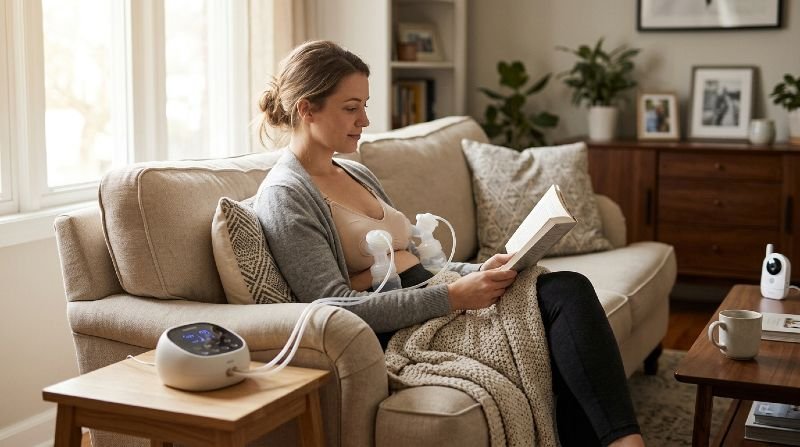
Maybe breastfeeding didn’t work the way you hoped. Maybe your baby had a latch issue or was premature. Maybe you returned to work earlier than expected — or you simply chose this path from the beginning. Whatever brought you here doesn’t matter. What matters is that you’re committed to giving your baby breast milk, and you deserve a real plan.
Exclusive pumping means you express milk using a breast pump and your baby receives that milk from a bottle. It’s not the path most people picture when they think of breastfeeding — but it’s a fully valid choice. The World Health Organization (WHO) recognizes expressed breast milk as a valuable feeding method for infants. Millions of mothers do it every day.
This exclusive pumping guide walks you through exactly how often to pump, how to store milk safely, how to protect your supply, and how to make this sustainable over the long haul.
What Is Exclusive Pumping and Who Does It?
Exclusive pumping — sometimes called “EPing” — means your baby gets breast milk exclusively through a bottle. You’re not nursing directly at the breast.
There’s no single type of mother who exclusively pumps. Some babies are premature and can’t latch. Some mothers have flat or inverted nipples that make direct nursing painful. Some mothers of multiples find pumping more manageable. Some mothers simply prefer to know exactly how much milk their baby is getting.
If you’ve ever felt like exclusive pumping is “second best” — let that thought go now. Your milk is your milk. Whether it travels from your breast to your baby directly or through a bottle doesn’t change its nutritional value.
Your Exclusive Pumping Schedule: What Actually Works
This is the most important piece. Your breast pump works by mimicking a baby’s feeding cues — the more you empty your breasts, the more milk your body produces. This is the supply-and-demand principle that governs all milk production.
The key rule: In the early weeks, your pump sessions replace nursing sessions. A newborn nurses 8–12 times per day. Your pumping schedule should reflect that frequency.
Newborn Stage (Weeks 1–6): Building Your Supply
This is your milk-building window. Every session counts — your body is learning how much milk to make.
| Time of Day | Session | Duration |
|---|---|---|
| 6:00 AM | Session 1 | 15–20 minutes |
| 9:00 AM | Session 2 | 15–20 minutes |
| 12:00 PM | Session 3 | 15–20 minutes |
| 3:00 PM | Session 4 | 15–20 minutes |
| 6:00 PM | Session 5 | 15–20 minutes |
| 9:00 PM | Session 6 | 15–20 minutes |
| 12:00 AM | Session 7 | 15–20 minutes |
| 3:00 AM | Session 8 | 15–20 minutes |
That middle-of-the-night session matters more than most mothers realize. Prolactin — the hormone that drives milk production — peaks between 1 AM and 5 AM. According to the Academy of Breastfeeding Medicine (ABM), pumping during this nighttime window has a measurable impact on overall daily output and long-term supply establishment.
Weeks 6–12: Establishing Your Rhythm
By now your supply should be more established. Most mothers can slowly reduce to 6–7 sessions per day, stretching gaps slightly — but don’t drop below every 3–4 hours yet.
| Frequency | Sessions Per Day | Time Between Sessions |
|---|---|---|
| Frequent | 8+ sessions | Every 2–3 hours |
| Standard | 6–7 sessions | Every 3–4 hours |
| Reduced | 5 sessions | Every 4–5 hours |
Most mothers settle into the standard range during this phase.
Three Months and Beyond
After the three-month mark, many mothers drop to 5 sessions per day — some manage on 4. This depends entirely on your individual supply. Watch your output closely. If supply dips when you drop a session, add it back. Your body will tell you what it needs.
How Long Should Each Session Last?
Most lactation consultants recommend pumping for 15–20 minutes per session. But the number of minutes matters less than fully emptying your breasts.
When milk stays in the breast, your body reads that as a signal to slow production. Empty breasts signal your body to make more.
After your milk lets down, pump for at least 5 minutes after the flow slows significantly. That extra effort stimulates a second letdown in many women — and clears out the fattier hindmilk your baby needs.
Signs you’ve fully emptied:
- Breasts feel soft instead of full
- Milk is no longer flowing or is barely dripping
- Breasts look visibly less full
- You’ve been pumping for at least 15 minutes
Don’t watch the clock obsessively. Watch your breasts instead.
Building and Protecting Your Milk Supply
Your supply is not fixed. It responds to how often you empty your breasts, your hydration, your stress levels, and your sleep. Here are the strategies that genuinely support production.
Stay hydrated consistently. Breast milk is mostly water. Aim for at least 8–10 cups of water per day. Keep a large water bottle at every pumping station — it’s easy to forget when you’re focused on the baby.
Eat enough calories. Breastfeeding and pumping burn extra calories — the Academy of Nutrition and Dietetics recommends adding approximately 300–500 extra calories per day while producing breast milk. This is not the time for restrictive eating.
Don’t skip overnight sessions too soon. The middle-of-the-night pump protects your supply more than any other single session, due to prolactin’s nighttime peak as documented by the ABM.
Try hands-on pumping. Massage your breasts before and during pumping. A study published in the Journal of Human Lactation found that hands-on pumping — combining breast compression with mechanical expression — increased milk output significantly compared to pump alone.
Check your pump parts regularly. Worn valves and membranes reduce suction. Replace pump parts every 2–3 months. This is one of the most overlooked supply solutions — a sudden unexplained drop in output is often the pump, not your body.

Breast Milk Storage: The Rules That Keep Your Baby Safe
The guidelines below are based on current recommendations from the Academy of Breastfeeding Medicine (ABM) — considered the gold standard for clinical lactation guidance worldwide.
| Storage Location | Temperature | How Long It Stays Safe |
|---|---|---|
| Room temperature | Up to 77°F (25°C) | Up to 4 hours |
| Refrigerator | 39°F (4°C) or below | Up to 4 days |
| Freezer (attached to fridge) | 0°F (-18°C) | Up to 6 months |
| Deep freeze / chest freezer | -4°F (-20°C) | Up to 12 months |
Print this chart and tape it to your fridge. You’ll look at it more than you expect.
Storage Dos and Don’ts
Do:
- Store milk in small amounts — 2–4 ounces per bag prevents waste when your baby doesn’t finish a feed
- Label every single bag with the date and amount in permanent marker — always use oldest milk first
- Leave space at the top of the bag when freezing — milk expands
- Cool fresh milk in the fridge before combining it with already-refrigerated milk
Don’t:
- Store milk in regular plastic bags — use milk storage bags or BPA-free containers designed for breast milk
- Shake breast milk — gently roll the bag to mix the fat layer; shaking breaks down some protective proteins
- Refreeze thawed milk — once thawed, use within 24 hours
- Warm milk in a microwave — this destroys nutrients and creates hot spots that can burn your baby’s mouth; use a bowl of warm water or a bottle warmer instead
Thawing and Warming Milk Safely
Move frozen milk to the fridge the night before you need it for slow, safe thawing. If you need it faster, hold the sealed bag under warm running water. Warm it gradually.
Test the temperature before feeding — a few drops on your inner wrist should feel warm but not hot.
You may notice thawed milk smells slightly soapy or metallic. This is usually caused by an enzyme called lipase — the milk is still safe. Some babies don’t mind; others refuse it. If your baby refuses thawed milk, ask a lactation consultant about scalding your milk before freezing to deactivate lipase.

Choosing the Right Pump for Exclusive Pumping
Not all pumps are equal — and if you’re pumping 6–8 times a day, you need something that can handle the workload.
| Pump Type | Best For | Typical Cost |
|---|---|---|
| Hospital-grade rental | NICU babies / low supply situations | $50–$80/month |
| Double electric (personal) | Daily full-time exclusive pumping | $150–$400 |
| Wearable (hands-free) | On-the-go or supplemental pumping | $80–$300 |
| Manual | Travel / occasional backup | $20–$50 |
For exclusive pumping, a double electric pump is the standard recommendation. It empties both breasts at once — cutting your pumping time roughly in half — and double pumping increases prolactin levels more than single-side pumping, according to ABM protocols.
Insurance coverage: Many insurance plans in the United States cover breast pumps. Check with your insurance provider before purchasing — this benefit is often overlooked and can save you significant money.
Wearable pumps have improved significantly and are useful for multitasking — but most aren’t strong enough to be your primary pump if you’re exclusively pumping full-time.
Nipple Pain and Common Physical Struggles
Nipple soreness is one of the most common reasons mothers stop pumping earlier than planned. The most important thing to check is your flange size.
The flange is the funnel-shaped piece that fits over your nipple. If it’s too small, your nipple rubs against the tunnel and causes pain. If it’s too large, too much of your areola gets pulled in. Most pump kits come with only one or two flange sizes — and those sizes are not right for most women.
Many lactation consultants offer flange fitting consultations. Getting a professional sizing at least once is genuinely worth it.
Other comfort strategies:
- Apply lanolin or coconut oil to nipples before pumping to reduce friction
- Silicone flanges are often more comfortable than hard plastic ones
- If you notice bleeding, cracking, or signs of infection, contact your healthcare provider promptly
For more on managing nipple pain, see our article on nipple vasospasm and breastfeeding pain.
Setting Up Your Pumping Routine for Real Life
Exclusive pumping is not just a feeding method — it’s a lifestyle commitment. The mothers who sustain it longest are the ones who build systems that support them.
Your Pumping Station
Pick two or three spots in your home where you’ll pump most often. Set each one up with everything within arm’s reach:
- Pump and all parts
- Clean cloth or towel
- Labeled storage bags
- Water bottle
- Snack
- Phone or book
- Lanolin or nipple cream
You shouldn’t need to stand up mid-session for anything.
Managing Pump Parts Without Losing Your Mind
Washing pump parts after every single session is exhausting. Here’s what many experienced exclusive pumping mothers do instead: after each session, store pump parts in a clean zip bag in the fridge. This slows bacterial growth between sessions. Then wash everything thoroughly once or twice daily with hot soapy water.
This approach is supported by official guidance from the Centers for Disease Control and Prevention (CDC) for healthy full-term babies. For premature or immunocompromised babies, talk to your care team about sterilization frequency.
The Emotional Side of Exclusive Pumping
Let’s be honest. Exclusive pumping is isolating in a way nobody warns you about. You feed your baby, then pump, then wash parts, then eat something, then pump again. Your whole day can feel structured around the pump.
Many mothers report feeling disconnected from the feeding experience at first. They expected nursing to feel a certain way — and pumping feels completely different. That grief is real and valid. Please don’t minimize it.
At the same time, many mothers find genuine pride in exclusive pumping. It takes extraordinary commitment. If you’re struggling emotionally with your feeding experience, it’s important to know that feeding challenges often intersect with postpartum anxiety and postpartum depression. Talking to someone about how you’re feeling — your midwife, doctor, or a therapist — is not a sign of weakness. It’s the right thing to do.
If you’re finding the emotional isolation of pumping difficult, online postpartum support groups specifically for exclusive pumping mothers exist and can provide real community and practical help.

Transitioning Away From Exclusive Pumping
At some point, most mothers decide to wean from the pump — at 6 months, 12 months, or sooner. All of those timelines are valid.
The safest way to wean is slowly. Drop one session every few days and give your body time to adjust. If you drop sessions too fast, you risk engorgement and mastitis.
Watch for signs of fullness between sessions. If your breasts feel uncomfortably full, add a short session back in and try reducing again more gradually.
Your final sessions may feel bittersweet — some mothers feel enormous relief, others feel unexpected sadness. Both responses are completely normal.
When to Seek Professional Support
Contact your healthcare provider or a certified lactation consultant (IBCLC) if you notice:
- A sudden significant drop in milk output
- Pain during pumping that doesn’t improve with flange adjustments
- Red streaks or warmth in your breast tissue — possible mastitis
- Fever alongside breast pain
- Your baby isn’t gaining weight as expected
Early support is always better than waiting. A lactation consultant can assess your specific situation and provide personalized guidance that a general article can’t replicate.
Myth vs. Fact
Myth: Pumped breast milk is nutritionally inferior to milk from direct nursing. Fact: Breast milk composition is remarkably similar whether it reaches your baby directly or through a bottle. Nutritional value remains excellent. The WHO and AAP both recognize expressed breast milk as a valuable feeding option.
Myth: You can tell how much milk you have by how full your breasts feel. Fact: Breast fullness is an unreliable indicator of supply, especially once supply is established. Output at the pump and your baby’s weight gain and wet diapers are far more reliable measures.
Myth: Missing one pump session will ruin your supply. Fact: Missing one session occasionally won’t significantly impact a well-established supply. Consistently missing sessions over days will signal your body to produce less — particularly in the first 12 weeks when supply is being built.
Frequently Asked Questions
Output varies significantly. In the early days, 0.5–2 ounces per session is normal. By weeks 6–8, many mothers produce 3–5 ounces per session when fully established. Total daily output for most exclusively pumping mothers ranges from 25–35 ounces per day.
Yes — but cool freshly pumped milk in the refrigerator first before combining it with already-refrigerated milk. Never add warm fresh milk directly to cold stored milk.
Breast milk composition is remarkably similar either way. There are very small differences in certain antibody delivery through direct nursing, but the nutritional value of your expressed milk remains excellent. Your baby benefits greatly from receiving your milk regardless of method.
Track wet diapers — 6 or more wet diapers per day in the early weeks is a good sign. Consistent weight gain at well-child visits is the most reliable indicator. If you have concerns, speak with your pediatrician.
In the United States, most employers with 50 or more employees are legally required under the FLSA Pump Act to provide break time and a private space (not a bathroom) for pumping. Know your rights. Bring a cooler bag with ice packs to store milk safely. A hands-free pumping bra makes working while pumping significantly more manageable.
First, check your pump parts — worn valves and membranes are a very common and overlooked cause of reduced output. Then evaluate your hydration, caloric intake, sleep, and pumping frequency. If the drop is significant and persists after addressing these factors, contact a lactation consultant.
Sources
- Academy of Breastfeeding Medicine (ABM) — Clinical Protocols Including Milk Storage
- World Health Organization (WHO) — Breastfeeding and Expressed Breast Milk
- American Academy of Pediatrics (AAP) — Breastfeeding Guidelines
- Centers for Disease Control and Prevention (CDC) — Cleaning Your Breast Pump Kit
- Academy of Nutrition and Dietetics — Nutrition During Breastfeeding
- Journal of Human Lactation — Hands-On Pumping and Milk Output Research
- US Department of Labor — FLSA Pump Act Rights
All information reflects evidence available as of 2026.


