 Skip to content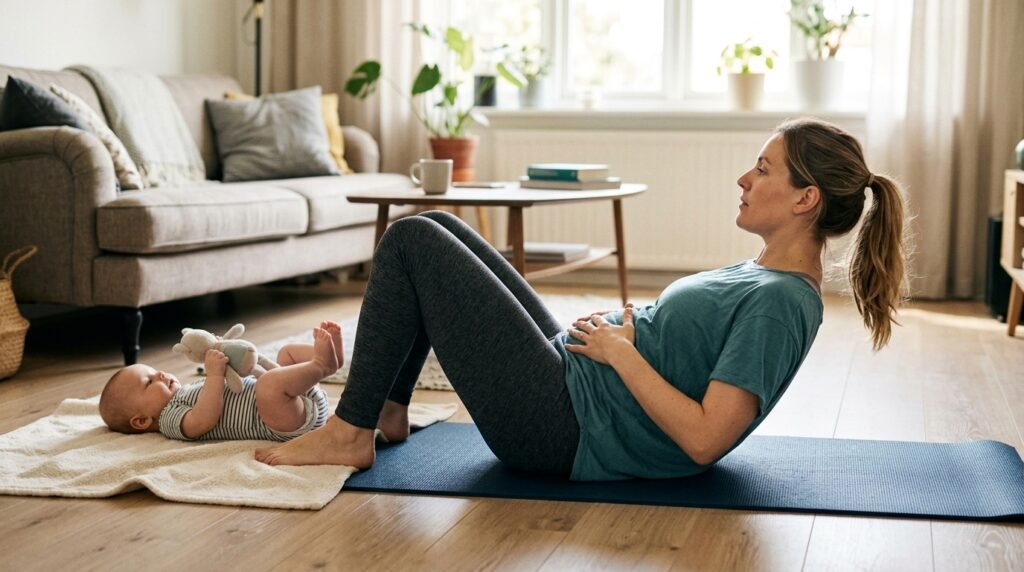
You sneeze. And then — oh no. If you just nodded knowingly, you’re in very good company.
Leaking urine after sneezing, laughing, coughing, or getting up quickly is one of the most common postpartum experiences nobody warned you about. It’s not your fault. Your pelvic floor — the group of muscles that supported your baby through nine months of pregnancy — took a serious hit. Pelvic floor recovery postpartum is a real process, and real solutions exist.
This article walks you through exactly what’s happening, what the research shows, and what you can do about it — step by step, without shame.
What’s Actually Happening to Your Pelvic Floor
Your pelvic floor is a hammock-shaped group of muscles sitting at the base of your pelvis. These muscles support your bladder, bowel, and uterus. They control when you urinate, when you have a bowel movement, and they play an important role in sexual function too.
During pregnancy, your growing baby puts months of sustained downward pressure on those muscles. During vaginal birth, they stretch dramatically — sometimes far beyond what they were designed to handle in a short period. And even if you had a C-section, the weight of pregnancy alone can weaken pelvic floor function significantly.
Think of it like a trampoline that’s been used heavily for nine months. It doesn’t bounce back overnight. Sometimes it needs real support to return to full strength.
The result of this weakening is most often stress urinary incontinence — leaking urine during physical activities that increase abdominal pressure. Sneezing, laughing, coughing, lifting your baby, going from sitting to standing. It’s called “stress” incontinence because the leak happens under physical stress — not emotional stress.
Some women also experience urge incontinence — a sudden, intense urge to urinate that arrives before you can reach the bathroom. Both types are common. Both are treatable.
If you had a perineal tear during delivery, your pelvic floor recovery may feel more complicated. Understanding how perineal tear recovery progresses week by week can help you set realistic expectations for your overall healing timeline.
What the Research Actually Shows
A lot of mothers assume leaking after birth happens only to “some unlucky people.” The data tells a different story.
| Statistic | Figure | Source |
|---|---|---|
| Women who experience urinary incontinence postpartum | Up to 33% | National Institutes of Health |
| Women with stress incontinence still affected at 12 months postpartum | Approximately 20% | ACOG Clinical Bulletin |
| Risk reduction with consistent pelvic floor exercises | Up to 56% | Cochrane Review |
| Women who actually seek treatment for pelvic floor dysfunction | Fewer than 25% | WHO Maternal Health Reports |
| C-section mothers who still experience pelvic floor issues | Up to 15–20% | NIH Research Database |
That last statistic surprises many people. C-section mothers are not immune — pregnancy itself creates significant pelvic floor strain regardless of how delivery happens. If you had a C-section and are experiencing leakage, you’re not imagining it, and you’re not alone.
The good news in these numbers: the risk reduction from consistent pelvic floor exercise — up to 56% — is genuinely significant, according to a review published in the Cochrane Database of Systematic Reviews.
Why Some Women Are More Affected Than Others

Several factors influence how significantly the pelvic floor is affected after birth:
- Long pushing phase during labor
- Large baby (over 4 kg / 8.8 lbs)
- Instrumental delivery using forceps or vacuum
- Third or fourth degree perineal tears
- Multiple pregnancies close together
- History of pelvic floor issues before pregnancy
- High BMI during pregnancy
This isn’t a list of things you did wrong. Birth is not something you control entirely. These factors help healthcare providers identify who may need extra support — nothing more.
Quick Win: At your 6-week postpartum checkup, specifically say: “I’m having trouble with bladder leakage.” That one sentence opens the door to a referral for pelvic floor physiotherapy, which is often covered by insurance or public health systems in many countries.
Starting Pelvic Floor Recovery: What You Can Do at Home
There’s a lot you can start doing right now — whether you’re two weeks postpartum or eight months in.
Getting Kegel Exercises Actually Right
Most women have heard of Kegels. Far fewer are doing them correctly.
A Kegel exercise involves squeezing and lifting the pelvic floor muscles — not your buttocks, thighs, or stomach. Many women clench everything at once and end up barely working the muscles they actually need.
Here’s a simple way to find the right muscles: imagine you’re trying to stop the flow of urine midstream, while also stopping the passage of gas. That combination — front and back — is your pelvic floor engaging. (Don’t actually practice while urinating, as this can interfere with normal bladder function over time.)
Beginner pelvic floor routine:
- Find a comfortable position — lying down is easiest when starting out
- Breathe in gently, then as you exhale, squeeze and lift your pelvic floor
- Hold for 3–5 seconds without holding your breath
- Release fully and rest for 5 seconds
- Repeat 8–10 times — aim for 3 sets per day
The release is just as important as the squeeze. A pelvic floor that can’t fully relax causes its own problems — pain, difficulty with intimacy, and worsening urgency.
According to a systematic review published in the International Urogynecology Journal, consistent pelvic floor muscle training — three sessions daily — produces significantly better outcomes than infrequent or high-intensity training. Consistency matters far more than effort on any single day.
Progressive Exercises as You Get Stronger
Once the basic hold feels manageable — usually by weeks 6–12 — you can progress:
- Longer holds: Work up to 8–10 second holds over time
- Quick flicks: Rapid squeeze-and-release pulses (10 in a row) train the fast-twitch muscles that respond during sneezing and coughing
- Functional Kegels: Squeeze before you cough, sneeze, or lift your baby — this “bracing” technique reduces real-life leakage almost immediately
- Bridge exercises: Glute bridges support pelvic floor strength through the hips and lower back
- Diaphragmatic breathing: Proper breathing directly supports pelvic floor function — your diaphragm and pelvic floor move together as one system
Pro Tip: Set a gentle phone alarm three times a day labeled “floor time.” Pelvic floor exercises are invisible — incredibly easy to forget until you sneeze and remember the hard way.

Common Myths That Hold Women Back
“Leaking after birth is just part of being a mother — you have to live with it.” Leaking is common, yes — but common doesn’t mean permanent or untreatable. With proper pelvic floor rehabilitation, many women see significant improvement within 8–12 weeks. Some resolve the issue completely. You don’t have to accept it.
“If you had a C-section, your pelvic floor is fine.” Nine months of pregnancy place enormous downward pressure on the pelvic floor regardless of how birth happens. C-section mothers experience incontinence at rates of 15–20% and genuinely benefit from pelvic floor assessment and rehabilitation.
“Pelvic floor exercises only help if you start them immediately after birth.” Research published in urogynecology literature consistently shows that pelvic floor rehabilitation produces meaningful improvements even when started months or years after delivery. It is never too late to begin.
“Kegels fix everything.” Kegels are genuinely helpful — but they’re one tool, not the whole solution. Some women have a pelvic floor that’s too tight rather than too weak, and Kegels in that case can actually worsen symptoms. This is one important reason why working with a pelvic floor physiotherapist is valuable — they assess your specific situation rather than applying a one-size-fits-all approach.
When to See a Pelvic Floor Physiotherapist
A pelvic floor physiotherapist (also called a pelvic health physio or women’s health physio) is a specialist trained to assess and treat pelvic floor muscles through hands-on techniques, guided exercise, and education. In many countries, seeing one after birth is considered standard postpartum care.
A typical appointment includes:
- A full history of your pregnancy, birth, and current symptoms
- Assessment of posture, breathing patterns, and how your core and pelvic floor work together
- An internal or external examination (always with your full consent) to assess muscle function
- A personalized rehabilitation plan
- Guidance on bladder habits, hydration, and daily movement
Sessions are private, professional, and completely non-judgmental. Many women say they wish they’d gone sooner.
| Symptom | Self-Care May Help | Physiotherapy Strongly Recommended |
|---|---|---|
| Occasional leaking when sneezing | Yes | Also helpful |
| Leaking with most physical activity | Partially | Yes |
| Strong urgency to urinate frequently | Limited | Yes |
| Pelvic heaviness or pressure | Seek assessment | Yes — rule out prolapse |
| Pain during intimacy after birth | Seek assessment | Yes |
Pelvic heaviness or a sensation of something “falling out” can be a sign of pelvic organ prolapse — when a pelvic organ (bladder, uterus, or rectum) descends toward or out of the vaginal canal. This is more common than many people realize and warrants professional assessment. Understanding how your uterus recovers after birth can help you put these sensations in context.
The ACOG Committee on Obstetric Practice provides specific clinical guidance on postpartum pelvic floor care that your OB or midwife follows. The NHS Pelvic Floor Exercises resource also offers validated, freely accessible guidance.
Bladder Habits That Make a Real Difference
Pelvic floor exercises work best alongside good bladder habits. Some everyday patterns make leakage worse without you realizing it.
Fluid Intake: The Counter-Intuitive Truth
Many women instinctively cut back on fluids, thinking less in means less out. This backfires. Concentrated urine irritates the bladder lining, actually increasing urgency and frequency.
Staying well hydrated — aiming for pale yellow urine as your guide — supports bladder health. Reduce caffeine and carbonated drinks if urgency is a major issue. Both have a direct irritating effect on the bladder.
Bladder Training
If you’re rushing to the bathroom at the slightest urge, your bladder may have learned a pattern of going too frequently. Bladder training — gradually extending the time between toilet visits — helps recalibrate that response. Start by waiting just a few minutes longer than the first urge. Don’t push through severe urgency, but gently lengthening the gap over days and weeks genuinely helps.
Simple Strategy: When a sudden urge hits, pause and do 5 rapid pelvic floor squeezes (quick flicks) before moving. This calms the bladder and reduces urgency — many women find it helps almost immediately.
Two Toilet Habits Worth Reconsidering
- “Just in case” toileting — going to the bathroom before you leave the house even when you don’t need to. This trains your bladder to expect emptying at lower volumes, increasing frequency and urgency over time.
- Hovering over public toilets — the half-squat position partially contracts the pelvic floor and prevents full bladder emptying. Sitting fully allows complete relaxation and proper voiding.
Medical Treatments: Beyond Exercise
For most women, consistent pelvic floor rehabilitation produces significant improvement. Some situations benefit from additional medical support.
At your postpartum appointments, your OB, midwife, or GP can:
- Assess for prolapse or significant muscle damage
- Refer you to a pelvic floor physiotherapist
- Discuss pessary devices — supportive devices worn internally to help manage prolapse symptoms
- Discuss medication for overactive bladder in appropriate cases
- Refer to urogynecology if surgical options may be warranted for severe cases
Surgery is genuinely a last resort — something most women with postpartum incontinence will never need. Raising your concerns early maximizes the chances of conservative treatment being fully effective.
| Treatment Option | Best For | When to Consider |
|---|---|---|
| Pelvic floor exercises | Stress and mild urge incontinence | All women — start as soon as possible |
| Physiotherapy program | Moderate symptoms or no improvement with self-care | From 6 weeks postpartum onward |
| Bladder training program | Urge incontinence and frequency | Alongside or after physiotherapy |
| Pessary device | Prolapse symptoms | After specialist assessment |
| Medication | Overactive bladder not responding to other treatments | After specialist review |
Research from the American Urogynecologic Society consistently shows that women who report pelvic floor symptoms at their postpartum appointment are significantly more likely to receive appropriate referrals and treatment than those who don’t bring it up. Your care team can only help with what they know about.
Warning Signs That Need Prompt Attention
Most pelvic floor recovery follows a gradual, manageable timeline. But some symptoms need more urgent evaluation.
Contact your midwife, GP, or OB without delay if you notice:
- A sudden or significant increase in leakage that wasn’t present before
- Leaking stool or gas without control
- A visible bulge at the vaginal opening, or a feeling of something protruding
- Severe pelvic pain unrelated to birth recovery healing
- Pain or burning with urination alongside leakage — may indicate infection
- Complete inability to control bladder or bowel function
These symptoms don’t mean something is catastrophically wrong — but they do mean you need professional assessment sooner rather than later.

Your Pelvic Floor and the Rest of Your Recovery
Pelvic floor recovery doesn’t happen in isolation. Your core muscles — deep abdominals, diaphragm, back muscles, and pelvic floor — all work as one interconnected system. Recovering from birth means gently retraining all of them together.
Returning to high-impact exercise too soon — running, jumping, heavy lifting — before your pelvic floor has adequate strength is one of the most common causes of setbacks. General guidance from pelvic health physiotherapists is to avoid high-impact exercise until at least 12 weeks postpartum, then return gradually based on your individual assessment rather than a calendar date alone.
If you’re also dealing with diastasis recti — abdominal muscle separation — this connects closely to your pelvic floor recovery and is worth raising at the same appointment.
Frequently Asked Questions
Most women notice meaningful improvement within 8–12 weeks of consistent pelvic floor exercises. Full recovery varies widely — some return to pre-pregnancy function within a few months, while others with more significant muscle damage may take 6–12 months with professional support. Starting physiotherapy earlier generally leads to faster outcomes.
Gentle pelvic floor engagement can usually begin within days of an uncomplicated vaginal birth, as soon as any numbness has resolved. The key word is gentle — very light squeezes rather than intense holds. If you had significant tearing or complications, check with your midwife first. Research cited by the NIH supports early, gentle pelvic floor activation in uncomplicated cases.
Usually, yes — stress incontinence is most commonly related to pelvic floor muscle weakness or injury. However, a pelvic floor that’s too tight can also cause leakage and urgency symptoms. Urinary tract infections can also cause sudden urgency. A proper assessment distinguishes between these causes so you receive the right treatment.
Yes. Pregnancy alone creates significant pelvic floor strain, and C-section mothers experience incontinence at rates of 15–20%. Additionally, a C-section scar can create fascial tension that indirectly affects pelvic floor function. A pelvic floor physiotherapist can assess both.
If you’ve been doing Kegels consistently for 6–8 weeks without improvement, the most likely explanation is that they’re not being performed correctly, that a tight pelvic floor (not a weak one) is the actual issue, or that your situation needs more targeted professional treatment. This is exactly what pelvic floor physiotherapy is designed for — please don’t give up. Lack of improvement is a signal to get specialist guidance, not to accept the status quo.
Sources
- National Institutes of Health (NIH) — Urinary Incontinence in Postpartum Women
- Cochrane Database of Systematic Reviews — Pelvic Floor Muscle Training for Urinary Incontinence in Women
- American College of Obstetricians and Gynecologists (ACOG) — Optimizing Postpartum Care
- International Urogynecology Journal — Pelvic Floor Muscle Training Frequency and Outcomes
- American Urogynecologic Society — Pelvic Floor Disorders
- NHS — Urinary Incontinence Treatment
- World Health Organization (WHO) — Maternal Health and Postpartum Care Reports
All information reflects evidence available as of 2026.


