 Skip to content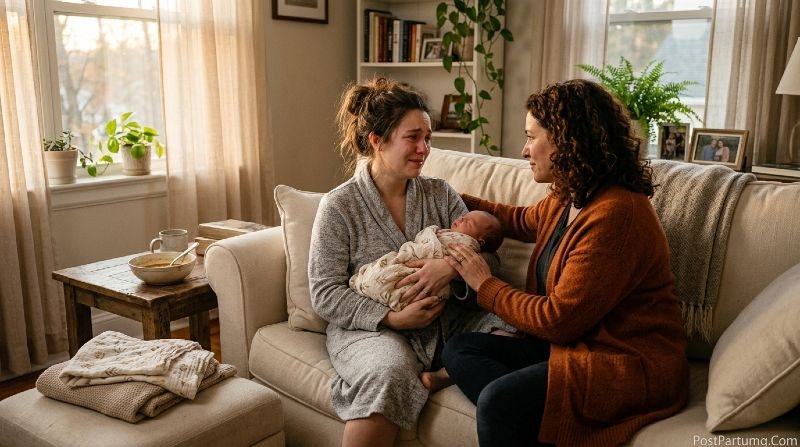
You prepared for birth. You read the books, took the classes, packed the hospital bag. But nothing quite prepared you for what comes after. The baby is here, and you’re exhausted in a way that goes bone-deep. You’re figuring out feeding and sleep and healing simultaneously. And the people who came to visit have gone home.
This is exactly where a postpartum doula steps in. Most mothers don’t hear about postpartum doula benefits until they’re already overwhelmed — and that’s a shame, because this kind of support can genuinely change your early postpartum experience. This guide walks you through what a postpartum doula actually does, what the research shows about their impact, and how to find and hire the right person for your family.
What Is a Postpartum Doula?
A postpartum doula is a trained support person who focuses specifically on the weeks and months after birth. This is different from a birth doula, who supports you through labor and delivery. A postpartum doula starts after your baby arrives.
She — or he or they — is not a nurse, not a nanny, and not a housekeeper. Think of a postpartum doula as a knowledgeable companion. She understands newborn behavior, infant feeding, and postpartum recovery. And she shows up in your home to put all of that knowledge to work for your specific family.
What a Postpartum Doula Actually Does
A postpartum doula adapts to what your family needs most. No two postpartum experiences are alike, and neither is the support they provide. Here’s a general picture.
Physical recovery support:
- Helping you rest and recover after birth
- Assisting with light household tasks so you can focus on healing
- Explaining what physical changes are normal in the days and weeks postpartum
- Watching for signs of complications and encouraging you to contact your care team
Infant feeding guidance:
- Supporting breastfeeding or bottle feeding without judgment
- Helping with latch issues and feeding positioning
- Offering basic lactation guidance — separate from a certified lactation consultant (IBCLC)
- Being a calm presence when feeding feels impossible at 3 am
Newborn care education:
- Showing you how to safely swaddle and soothe your baby
- Explaining newborn sleep patterns so you understand what’s normal
- Helping you read your baby’s hunger and tired cues
- Building your confidence one small skill at a time
Emotional and mental wellness support:
- Listening without judgment when you need to talk
- Helping you identify signs of postpartum depression or anxiety
- Reminding you that what you’re feeling is valid
- Connecting you to professional resources if needed
Practical daily help:
- Light meal preparation to support your recovery
- Help with laundry or tidying so you can rest
- Entertaining older siblings while you feed or rest
Partner and family support:
- Teaching partners how to help confidently
- Bridging communication between parents during a stressful season
- Helping families with specific cultural traditions feel seen and respected
What the Research Shows About Postpartum Doula Benefits
The research on postpartum support is genuinely compelling — and worth understanding before you decide.
A systematic review published in the Journal of Perinatal Education found that mothers who received structured postpartum support reported significantly higher confidence in newborn care and meaningfully lower rates of postpartum depression symptoms compared to those who received standard care alone.
Research published in the journal Birth found that women with continuous postpartum support were twice as likely to still be breastfeeding at six weeks compared to women without professional support — a significant finding given that breastfeeding outcomes are closely tied to maternal mental health and infant nutrition. According to the Academy of Breastfeeding Medicine (ABM), early skilled lactation support is one of the strongest predictors of breastfeeding duration.
A study conducted at the University of Minnesota found that professional in-home postpartum support reduced anxiety scores in new mothers by nearly 40% compared to mothers who received standard care alone — a meaningful improvement that translates directly into daily quality of life.
The foundational research on early postpartum support comes from Dr. Marshall Klaus and Dr. John Kennell, whose decades of work on mother-infant bonding showed that supported mothers demonstrate stronger early bonding and report better mental health outcomes. Their research, published across multiple peer-reviewed journals including Pediatrics and the New England Journal of Medicine, helped establish the modern evidence base for postpartum doula care.
The World Health Organization (WHO) and ACOG both explicitly recognize that emotional and practical support after childbirth directly affects maternal mental health outcomes — and that access to that support remains a critical gap for many mothers globally.
In summary, research links structured postpartum support to:
- Lower rates of postpartum depression and anxiety
- Longer breastfeeding duration
- Better sleep for the mother
- Improved confidence in newborn care
- Stronger early parent-infant bonding

How a Postpartum Doula Compares to Other Support Options
| Type of Support | Primary Focus | Emotional Support | Teaches Parents | Timing |
|---|---|---|---|---|
| Postpartum Doula | Whole family | Yes | Yes | First weeks to months |
| Night Nurse | Baby only | Limited | Sometimes | Overnight only |
| Nanny | Child care | Limited | No | Long-term |
| Lactation Consultant | Feeding only | Sometimes | Yes | As needed |
| Family Help | Varies | Yes | Sometimes | Varies |
A postpartum doula is the only support option that centers the whole family and actively builds your confidence as a parent — rather than doing the care work for you.
Signs You Could Really Benefit From a Postpartum Doula
Some families plan for a doula from the start. Others realize they need support after the baby arrives. Both approaches are valid. A postpartum doula is especially valuable when:
- You’re recovering from a cesarean and need extra physical help
- You had a difficult birth and are processing it emotionally
- You’re a first-time parent and feel overwhelmed by newborn care
- You have older children and are managing a lot simultaneously
- You have limited family support nearby
- You’re experiencing signs of postpartum depression or anxiety
- Your partner is returning to work quickly and you’ll be alone
- You’re having feeding challenges affecting your confidence
- You’re a single parent or have multiples
You don’t need to be in crisis to hire a postpartum doula. You simply need to be a new mother. That is enough.
The Postpartum Doula and Mental Health
This deserves direct attention because it matters so much.
Postpartum depression affects roughly 1 in 5 mothers. Postpartum anxiety affects even more. Yet so many women go through it quietly because they feel ashamed or unseen.
A postpartum doula is often the first person to notice that something isn’t quite right — because she spends real time in your home and sees how you’re doing behind closed doors. She creates a space where you can be honest about how you actually feel.
She is not a therapist. She will be clear about that. But she can validate your experience, encourage you to seek professional help, and sit with you in the hard moments without flinching.
If you’re curious about what additional support looks like alongside a doula, online postpartum support groups can be a genuinely valuable complement — especially on the days between doula visits.
How to Find a Qualified Postpartum Doula
Step 1: Know What Credentials to Look For
Postpartum doulas can be certified through several organizations. The most established include:
- DONA International — dona.org — one of the oldest and most recognized certifying bodies
- CAPPA (Childbirth and Postpartum Professional Association) — cappa.net
- ProDoula — prodoula.com
- DoulaMatch — doulamatch.net — also a search platform
Certification means the doula has completed formal training, passed exams, met experience requirements, and follows a code of ethics. Not all excellent doulas are certified — but certification gives you a verified starting point and a clearer basis for comparison.
Step 2: Start Your Search Early
The best postpartum doulas book quickly. Ideally, start your search during your second trimester. If your baby is already here, start now — you can still find good support, but begin immediately.
Good places to search:
- DoulaMatch.net
- DONA International Directory
- Local birth worker groups and midwifery practice referrals
- Your OB’s or midwife’s recommendations
Step 3: Interview at Least Three Candidates
A postpartum doula will be in your home during one of your most vulnerable seasons. Finding someone you genuinely trust is essential — never hire the first person you speak with without comparing options.
Questions to ask during your interview:
About training and experience:
- What certification do you hold and through which organization?
- How many postpartum clients have you worked with?
- Do you have experience with my specific situation (C-section, multiples, mental health concerns, cultural practices)?
About her approach:
- How would you describe your support philosophy?
- How do you handle it if you disagree with a parenting choice we’re making?
- What happens if a situation arises that’s beyond your scope of practice?
About logistics:
- What are your available hours? Do you offer overnight support?
- What is your rate and what does it include?
- Do you have backup coverage if you become unavailable?
- Are you insured?
About fit:
- Why did you become a postpartum doula?
- Can you provide references from recent clients?
Pay attention to how she makes you feel during the conversation. Does she listen? Does she respect your questions? Does she feel warm and trustworthy? Your instincts matter here.

Understanding Postpartum Doula Costs
Rates vary by location and experience. These ranges reflect general US market rates as of 2026.
| Type of Service | Average Cost (US) |
|---|---|
| Daytime hourly rate | $25–$50 per hour |
| Overnight shift (8 hours) | $150–$300 per night |
| Small package (10–15 hours) | $300–$600 |
| Full support package (30–40 hours) | $900–$2,000 |
| Extended newborn care packages | $2,000–$4,000+ |
Always ask for a full breakdown of what’s included before signing any agreement. These are general ranges — your local market will vary.
Ways to Offset the Cost
- HSA and FSA accounts often cover postpartum doula services — check with your specific plan
- Some insurance plans now include doula benefits — always verify before assuming
- Baby shower gift — many families now ask for doula support hours as a shower gift instead of or alongside traditional items
- Combining with a meal train stretches your community support budget effectively
What to Expect in Your First Session
Your first session might feel a little unfamiliar. That’s normal — you’re letting someone new into your home and your life during a vulnerable time.
A good doula will spend time getting to know you first. She’ll ask about your birth experience, your goals for recovery, and what feels hardest right now. Then she gets to work.
She might sit with you while you feed your baby. She might prepare something for you to eat while you rest. She might take the baby for an hour so you can actually sleep. She’ll check in emotionally — not clinically, just as a caring presence who genuinely wants to know how you’re really doing.
By the end of your first session, most mothers feel something shift. A small exhale. A little relief. The feeling that someone is finally in your corner.

What About Your Partner?
Your partner is also going through a massive transition — and a postpartum doula supports the whole family unit.
Many doulas actively include partners in their visits, teaching diaper changes and swaddling to partners who feel unsure, and helping partners understand what you’re recovering from physically and emotionally. They bridge the gap when communication breaks down because everyone is exhausted.
A postpartum doula is not a replacement for partner support — she’s an addition to it. Our guide on partner support during postpartum recovery covers the partner’s role in detail.
Red Flags to Watch For When Hiring
Not every person who calls themselves a postpartum doula is the right fit. These are warning signs worth taking seriously:
- She dismisses your preferences or makes you feel judged
- She has no formal training, certifications, or references to offer
- She makes promises that seem too good to be true
- She pushes a specific parenting philosophy rather than following your lead
- She’s unwilling to sign a basic service agreement
- She seems uncomfortable when you ask about her credentials or experience
Trust your instincts. If something feels off during the interview, it will feel worse when she’s in your home at 2 am.
Your 6-Week Checkup and Beyond
A postpartum doula is often most active in the first four to six weeks after birth. But the need for support doesn’t always end there.
Your 6-week postpartum checkup is an important milestone — a good time to assess how you’re feeling physically and emotionally, and to discuss whether extended support would be helpful. Some families hire a doula for two or three weeks. Others continue for several months. Your needs should guide those decisions.
Myth vs. Fact
🔍 Postpartum Doulas: Myths vs. Evidence-Based Facts
Frequently Asked Questions
No. A baby nurse focuses almost entirely on the baby. A postpartum doula’s primary client is you — the mother. She supports your recovery, your confidence, and your whole family’s adjustment.
Absolutely. A good postpartum doula supports your feeding choice without judgment. Whether you’re breastfeeding, pumping, or formula feeding, she’ll help you feel confident and informed.
A postpartum doula is not a mental health professional and is not trained to diagnose or treat postpartum depression or anxiety. She can offer emotional support, recognize warning signs, and encourage you to seek professional care. If you’re struggling with your mental health, connecting with a qualified therapist or psychiatrist is important alongside doula support.
Yes — many offer overnight support, which is one of their most popular services. An overnight doula cares for the baby during nighttime hours so you can get uninterrupted sleep. Sleep deprivation is a serious health issue, and overnight support can make a dramatic difference in your recovery.
The best postpartum doulas do. Cultural traditions around birth recovery vary widely — from specific food practices to rest and confinement traditions. A culturally sensitive doula will ask about your traditions and work within them. Ask about this directly during your interview.
Sources
- Academy of Breastfeeding Medicine (ABM) — Clinical Protocols
- World Health Organization (WHO) — Maternal Mental Health
- American College of Obstetricians and Gynecologists (ACOG) — Optimizing Postpartum Care
- Journal of Perinatal Education — Structured Postpartum Support and Maternal Outcomes
- Birth — Postpartum Support and Breastfeeding Duration Research
- DONA International — Find a Postpartum Doula
- Klaus, M.H. & Kennell, J.H. — Research on Maternal Support and Mother-Infant Bonding, published in Pediatrics and New England Journal of Medicine
All information reflects evidence available as of 2026.


